Hecuba – In the shade of Plato’s Republic
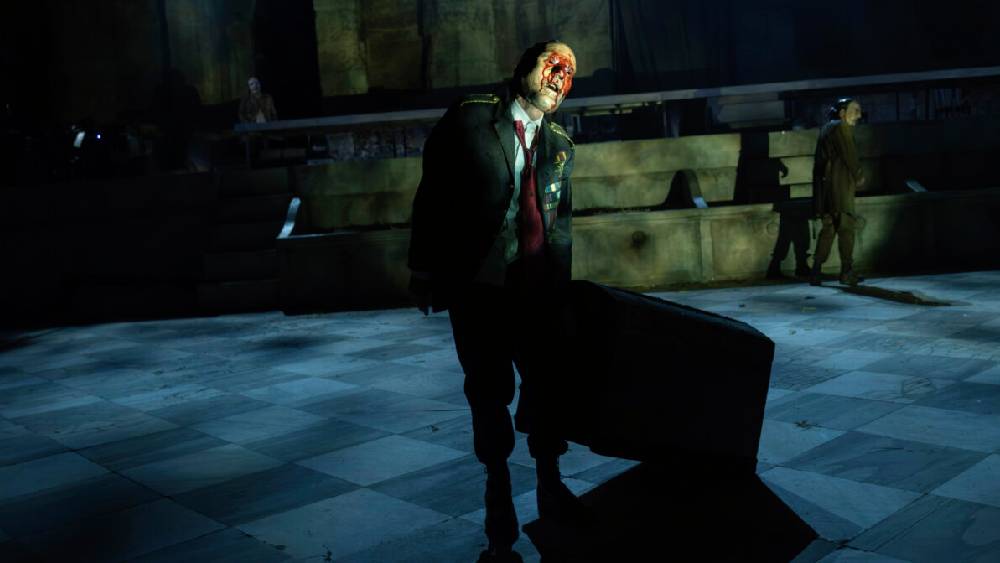
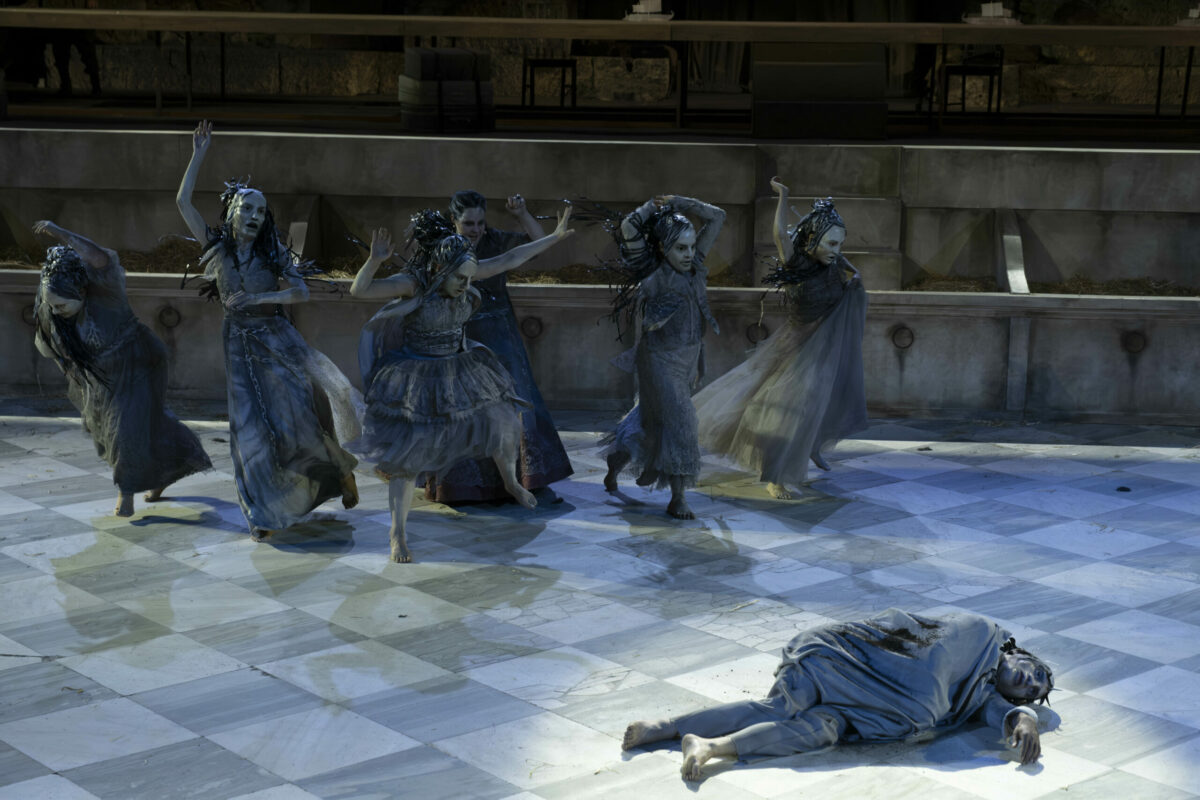
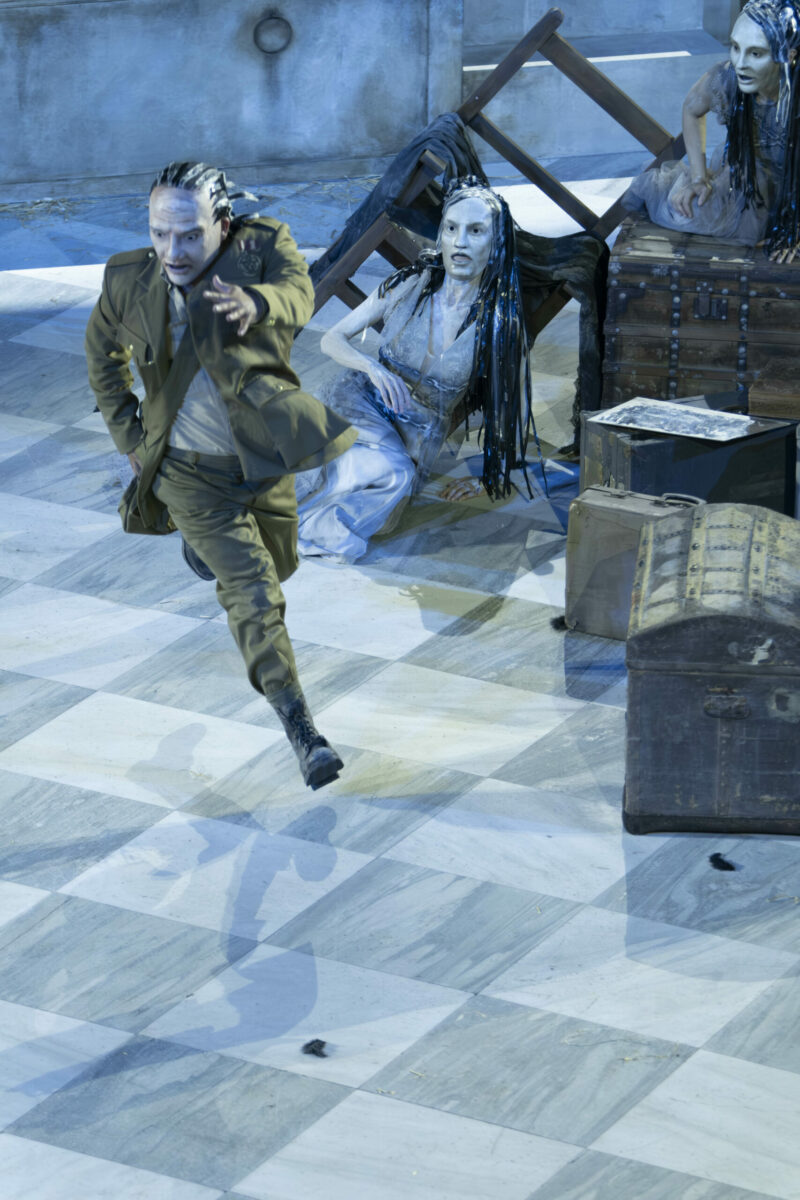
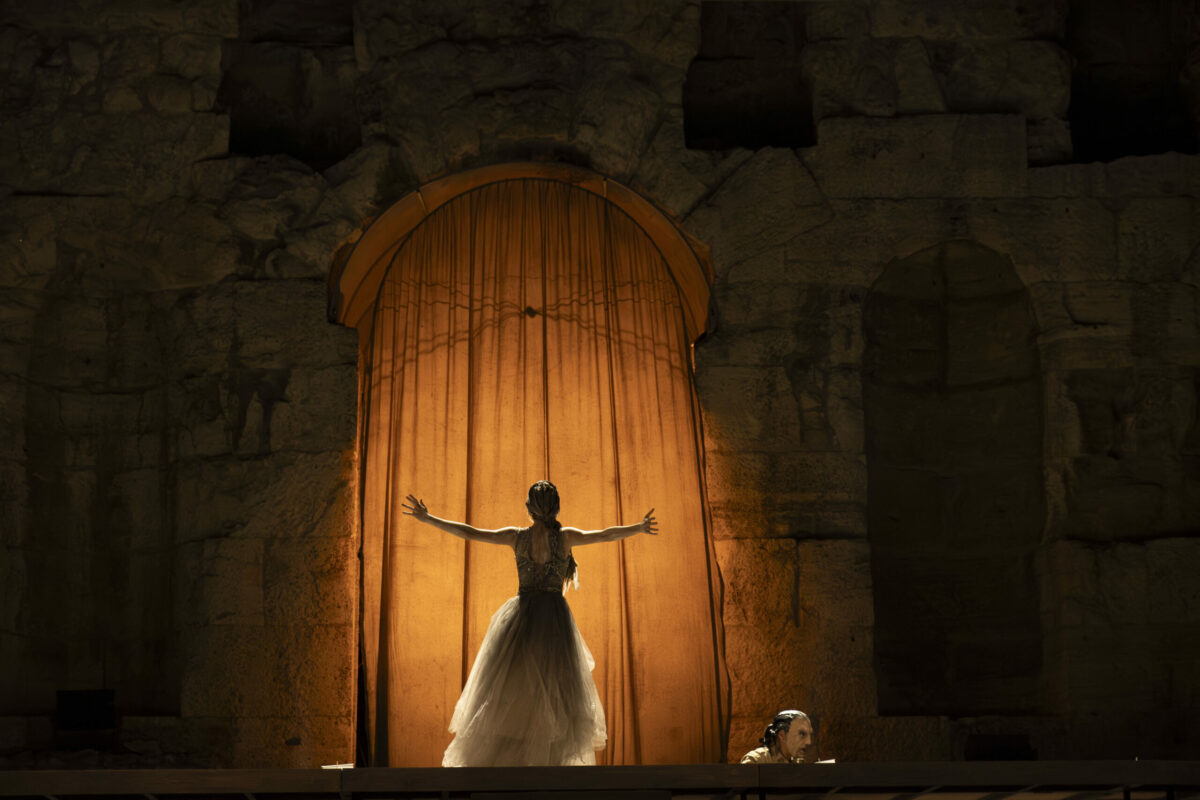
Euripides’ Hecuba, written in the early years of the Peloponnesian War, does more than recount the fall of mythical Troy; it also portrays the twilight of the Athenian polis as a coherent political and civic structure.
Throughout the play, the invocation of law and justice recurs insistently – an indication of a period in which neither can truly function.
By contrast, Plato’s Republic, composed during a period of cultural upswing, articulates a utopian vision of reconstruction, binding knowledge to the very fabric of political order. Though separated by genre and time, the two works align over a shared axis of inquiry:
What are justice, truth, and education?
Where do the limits of human morality lie?
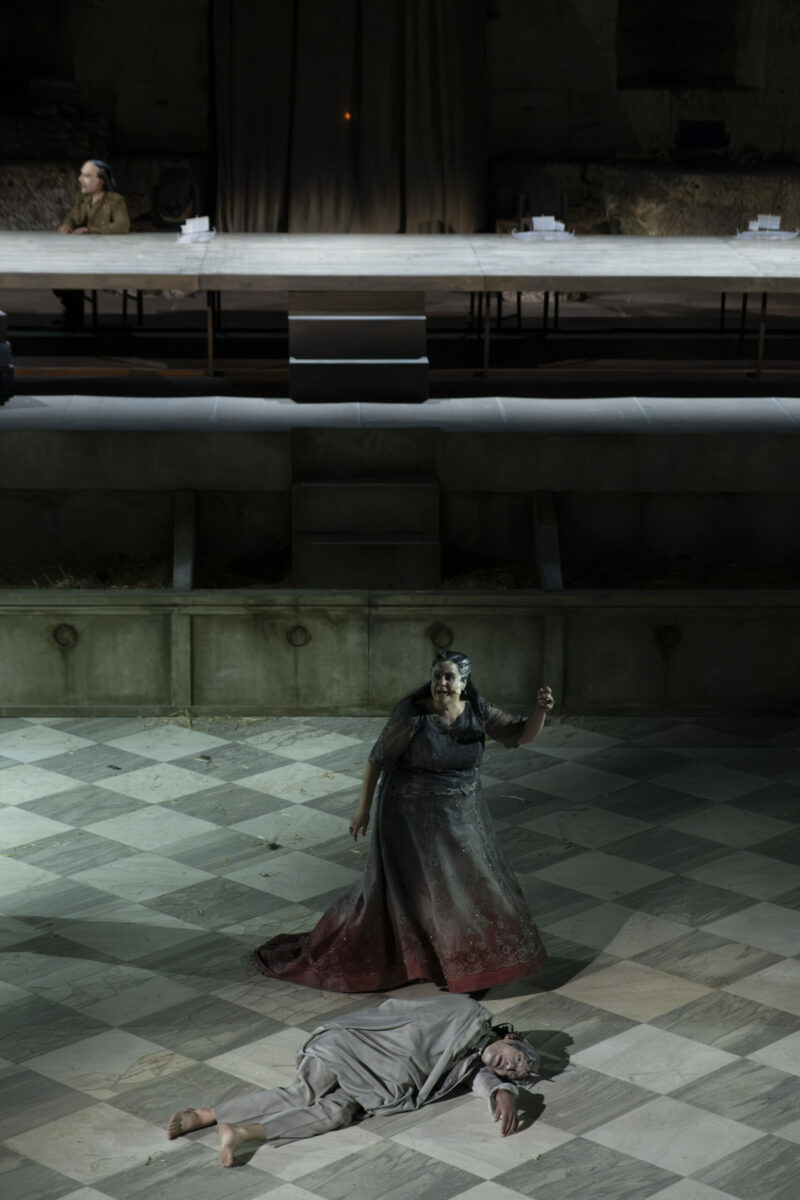
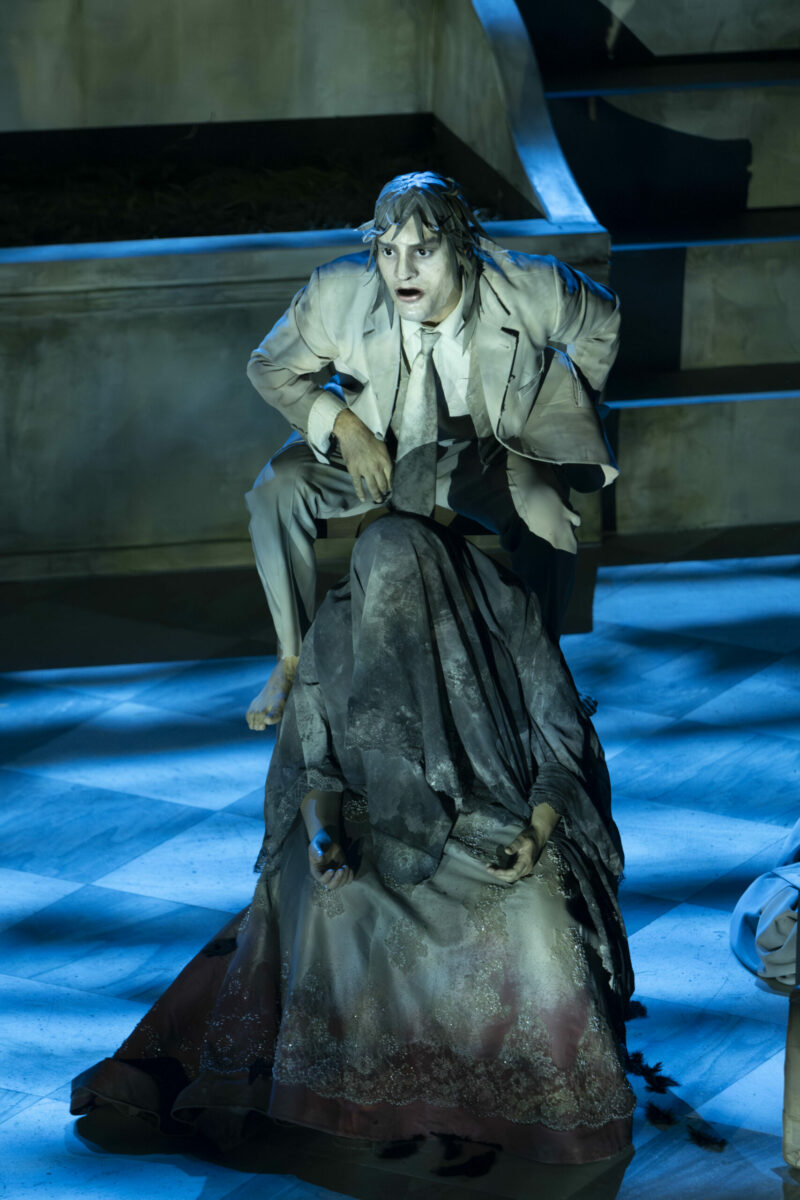
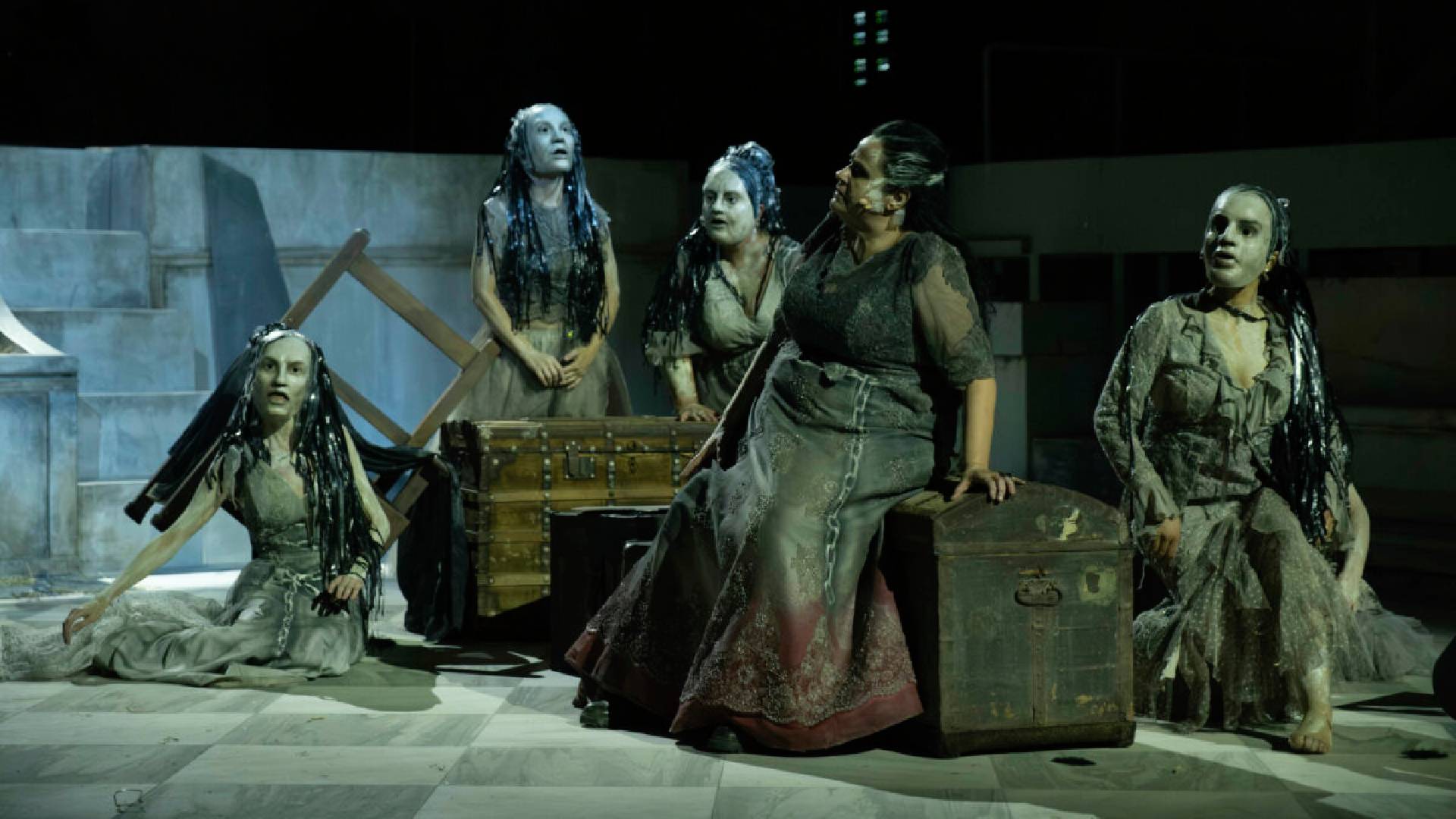
At the heart of the staging stands Hecuba – once powerful and benevolent – now an emblematic figure of moral and political collapse. Shattered by loss and exposed to the violence of history, she confronts the disintegration of every stable point of reference in her world.
Queen, mother, captive – she bears upon her body the marks of war and human brutality.
As every sense of justice dissolves, she is gradually driven toward an extreme threshold where ache, vengeance, morality, and justice become indistinguishable.
Set against her devastation, the Platonic fragments introduce a different field of reference. Justice – as an applied idea aimed at the harmonic coexistence of the whole – and the pursuit of truth beyond appearances and the narrow perspective of the individual, form a conceptual framework within which Hecuba is re-inscribed.
They trace the contours of a mental horizon from which Euripides’ characters have long since drifted.
In this way, the excerpts from the Republic expand the field of the tragic in Hecuba, where – aside from the dead, who are always the young and the innocent – no one emerges morally unscathed.
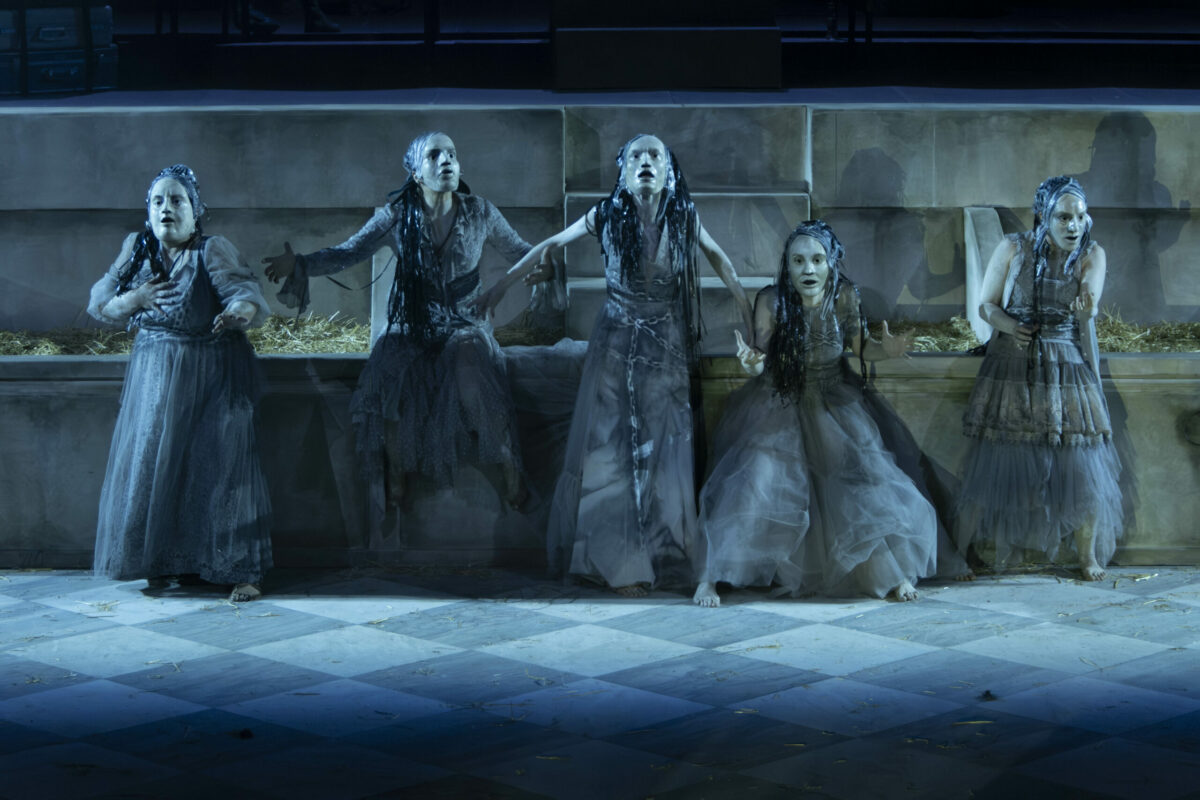
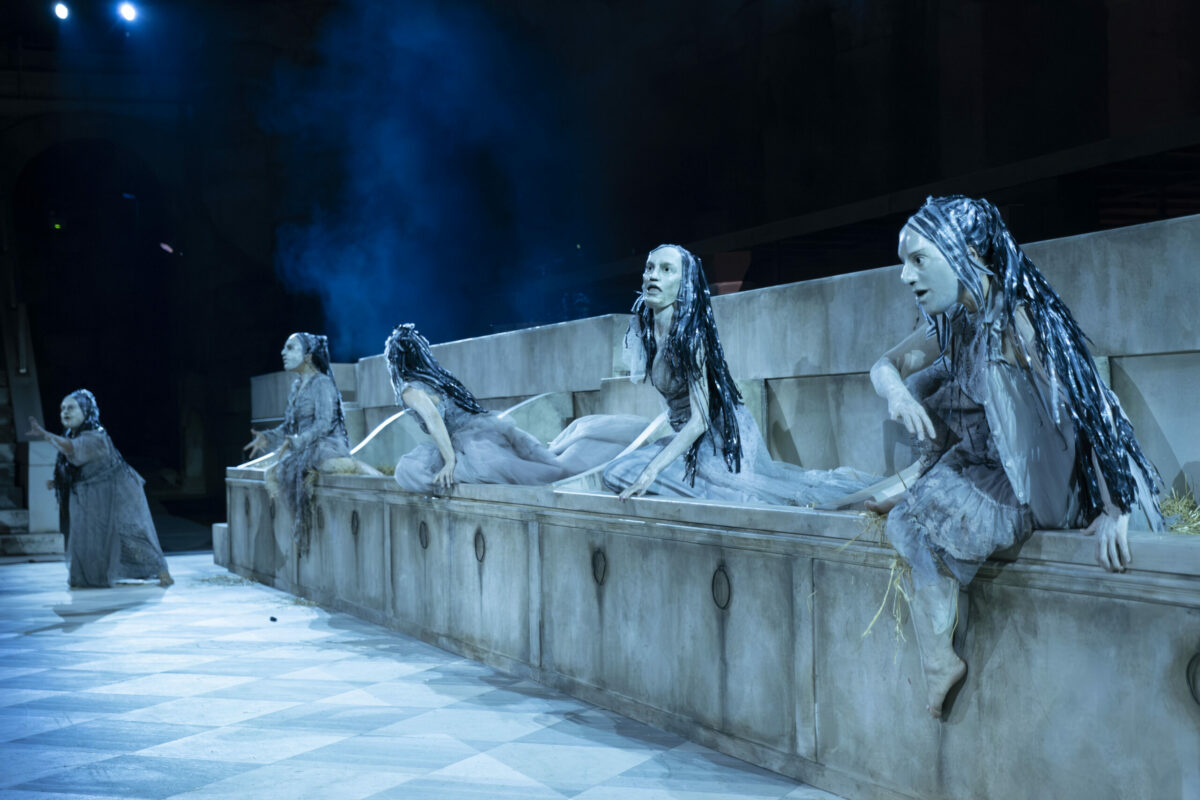
The backbone of the staging is the “Allegory of the Cave,” Plato’s emblematic parable on illusion, knowledge, and the possibility of awakening.
The image of prisoners mistaking shadows for reality establishes here a powerful theatrical condition.
Within it, Hecuba rises as a catalytic presence, while the incisive directorial gaze of Stathis Livathinos transforms the union of tragedy and philosophy into a locus of reflection and trial – one where the limits of awareness, human measure, and responsibility are relentlessly tested.
Text composition: Elsa Andrianou, Stathis Livathinos
Direction – Dramaturgical adaptation: Stathis Livathinos
Set & costume design: Eleni Manolopoulou
Original music composition: Thodoris Abazis
Lighting design: Alekos Anastasiou
Movement – Mask work coaching: Camilo Betancor
Sound design & engineer: Kostas Michopoulos
Mask construction: Dimitra Kaisari workshop
Assistant to the director: Ilektra Maggina
Assistant to the set & costume designer: Emily Koukoutsaki
Assistant to the composer: Giorgos Karoumpalos
Production co-ordination: Nikos Charalambidis
Props assistant: Stavroula Papapostolou
Set painting: Nikos Karras
Hair – Make-up: Idomeneas Michalodimitrakis
Translation to English: Melissanthi Giannousi
Photographer: Vasia Anagnostopoulou
Cast (in alphabetical order): Giorgos Dambasis, Antonis Giannakos, Nikos Kardonis, Nestor Kopsidas, Anna Magou, Lilly Meleme, Polyxeni Papakonstantinou, Erato Pissi, Theodosia Savvaki, Maria Savvidou, Virginia Tamparopoulou, Aris Troupakis
Musicians on stage: George Kokkinaris double bass, Angelos Pappas electric guitar, Iakovos Pavlopoulos percussion
Executive production: Polyplanity Productions
Production management: Yolanda Markopoulou, Vicky Strataki
Co-production Athens Epidaurus Festival – Lykofos Cultural Organisation/Giorgos Lykiardopoulos
We would like to thank Hellenic Hypermarkets Sklavenitis S.A. for its support.